
Want To Get The Latest Catalogue?
A flower can look perfect in a supplier photo and still disappoint you after a 20-day sea freight. The color shifts between batches. Petal edges fray after a week in storage. Flower heads fall off during installation. Crushed cartons arrive with bent stems and no recovery.
What “Silk Flower” Actually Means Today
Before checking quality, understand what you are buying.
Most modern “silk flowers” are not made of natural silk. The term is an industry catch-all for artificial flowers made from polyester fabrics, brushed or flocked textiles, PE, PU, EVA foam or plastic. The material name alone proves nothing — two roses made from polyester can differ completely in fabric weight, surface finish, dyeing, petal shaping and assembly.
Always ask the supplier for a full material description: fabric type, stem material, wire gauge, paint or dye process, and flame-retardant or UV treatment if relevant. If the answer is only “premium silk”, keep asking.
Contact information:
Whatsapp: 0086 136 02110465
Whatsapp: 0086 139 2007 7206
E-mail: enquiry@blush-rose.com
Website:https://www.blush-rose.com
Welcome follow us:
Instagram: @blushrose2022
Facebook: @blushrose2022
Youtube: @blushrose2022
1. Feel the Fabric and Inspect Petal Edges
Quality starts at the fabric level.
Run your fingers across the petals, front and back. Then hold the flower close to your eyes and examine the edges of several petals — not just the front bloom.
What to check:
- Fabric weight and softness — thin, shiny polyester feels cheap and catches light like plastic
- Petal edges — rough, frayed or unevenly cut edges mean poor die-cutting and finishing
- Burn marks or glue stains — visible heat-cutting marks and adhesive residue indicate rushed production
- Texture consistency — all petals on one stem should match; differences suggest mixed batches
- Shape memory — gently fold a petal and release it; it should recover its shape quickly
A good flower should feel substantial, not papery. Its petals should have a matte or softly brushed finish rather than a strong plastic shine.
2. Check Color Under Different Light
Color is where most “small problems” become big ones.
Place the sample near a window, then look at it under warm indoor light and under a phone camera flash. A quality flower keeps a soft, natural appearance in all three conditions. A cheap one throws strong white reflections and looks obviously plastic in photos — a disaster for wedding florists and online retailers who shoot product images.
Also compare several units of the same color. Small natural variation between units is normal; large differences are a red flag for repeat orders.
For custom colors, agree in writing on:
- A Pantone reference or an approved physical color sample
- Acceptable color tolerance between batches
- Lighting conditions for color approval
- Whether all units must come from one dye lot
Never approve color from a screen. Phone displays and studio lighting change how colors look.
3. Test the Stem, Wire and Flower Head
A beautiful flower is worthless if the head snaps off at a wedding.
Hold the stem and apply light pressure to the flower head. It should stay firmly attached. Bend the stem back and forth several times — the internal wire should move smoothly without breaking through the coating.
Inspect these points:
- Connection between the flower head and the stem
- Branch joints and leaf attachment points
- Exposed or sharp wire ends
- Stem thickness and rigidity (does it hold the angle you need?)
- Loose heads, wobbling petals or rattling parts
4. Measure Real Density and Coverage
Low unit price does not equal low project cost.
A thin flower forces you to buy more stems to fill a bouquet, a flower wall or a retail pot. Smart buyers calculate cost per finished arrangement, not cost per stem.
Record for every sample:
- Flower head diameter
- Total stem length
- Number of branches, open flowers and buds per stem
- Number of leaves
- Weight per stem
- How many stems are needed for one finished arrangement (test this yourself)
Then compare: supplier A sells a stem 10% cheaper, but you need 30% more stems to fill the same vase. Supplier A is the more expensive option. This single calculation changes how you negotiate.
5. Verify Packing, Carton Specs and Shape Recovery
Packing decides whether your order arrives sellable — or as a claim.
Before ordering, request and verify:
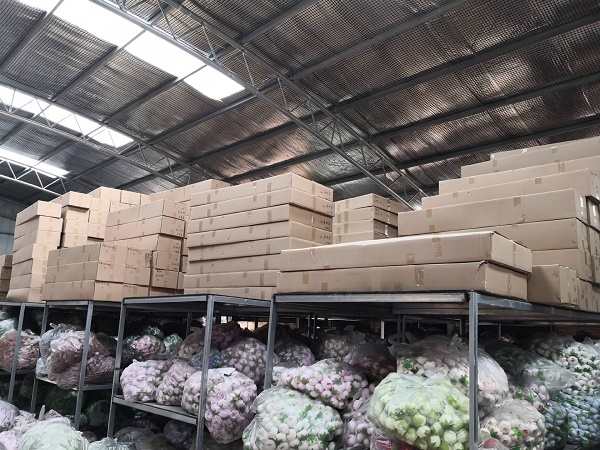
- Inner pack quantity and inner box size
- Master carton size, gross weight, net weight and units per carton
- Photos of the flowers before packing, inside the carton, and after unpacking
- Whether heads are protected from crushing during loading
Open a packed sample and check for crushed heads, permanent petal creases, bent stems, color transfer between layers, and moisture.
Ask how the flowers recover after transport. Some need only a light shake; others need steaming. The recovery method must be safe for the fabric, dye and glue. Also confirm the container loading plan — correct carton dimensions and weights matter for your freight budget and for export compliance. (This is why we provide full carton specs and carton size data on every Blush-Rose quotation.)
6. Approve a Golden Sample and a Written Defect List
Never let an informal chat message be your quality standard.
Keep one approved “golden sample” per item. Add photos, measurements, material details, packing rules and color references to your purchase specification.
Define defects before production starts:
- Critical defects: exposed sharp wire, unsafe materials, wrong product
- Major defects: wrong color, loose flower heads, incorrect size, heavy glue marks, serious fabric damage
- Minor defects: small removable marks, light creases that recover easily
A factory that agrees to a written defect list in advance is a factory that plans to pass inspection — not to argue about it later.
7. Ask the Questions That Separate Factories from Traders
Many “factories” are trading companies with an office and a catalog. Real factories answer operational questions quickly and specifically.
Ask:
- Can you show us your production workshop, molding and QC records on a video call?
- How many mold sets do you own? (Blush-Rose owns 200+ sets of molds and offers 200+ product categories)
- How many raw material suppliers do you work with? (We cooperate with 20+ material manufacturers)
- What is your QC process per batch — incoming material, in-process, and final inspection?
- Can we order samples before a bulk order, and what is the MOQ for a test order?
- What is your lead time, and how do you handle defects found after arrival?
- How do you ensure color consistency for repeat orders?
A direct factory also answers faster. Blush-Rose responds to inquiries within 24 hours, ships samples before bulk orders, and accepts low MOQ test orders — because we are the manufacturer, not a middleman.
How Blush-Rose Controls Quality
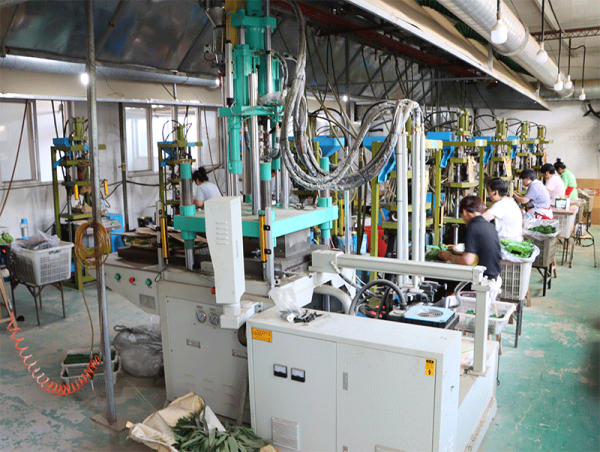
As a factory-direct manufacturer in Wuqing District, Tianjin, with 17 years in the artificial flower business, our quality control runs at three levels:
- Incoming material check — fabric, wire, paint and glue are inspected before production; we work with more than 20 qualified raw material suppliers.
- In-process control — color matching, petal assembly and stem wiring are checked on the line; more than 200 mold sets keep shapes consistent.
- Final inspection — every batch is checked against the approved sample, the defect list and the packing specification before loading.
We ship to customers in more than 100 countries, and we offer OEM/ODM customization — custom colors, sizes, stems, packaging and private labels — with samples available before you commit.
Frequently Asked Questions
How can I check the quality of an artificial flower sample?
Follow the 7-point checklist above: fabric and petal edges, color under different light, stem and head strength, density and coverage, packing and shape recovery, a golden sample with a written defect list, and factory verification.
What is the difference between silk, PE, PU and plastic flowers?
Silk/polyester flowers offer the most realistic look and soft touch, ideal for weddings and retail. PE and PU flowers are more durable and weather-resistant, good for outdoor and cemetery use. Plastic flowers are the most economical. The best choice depends on your market and budget.
Can I order a sample before bulk production?
Yes. Blush-Rose ships samples before a bulk order so you can check material, color and structure with your own hands.
What is your MOQ?
We offer low MOQs and accept small test orders, so you can verify quality before scaling up.
How do you control quality on bulk orders?
Every batch passes incoming material checks, in-process control and final inspection against the approved golden sample and a written defect list.
Do you offer OEM/ODM customization?
Yes. We customize colors, sizes, stems, packaging and private labels according to your design, with hundreds of mold patterns to choose from.
Get a Quote
Need help evaluating a sample or choosing the right flowers for your market? Contact us:
- Email: enquiry@blush-rose.com
- WhatsApp / Tel: +86 139 2007 7206
- Visit our artificial silk flowers flowers for wholesale options
Blush-Rose (ASDA Technology (Tianjin) Co., Ltd) — factory-direct artificial flower manufacturer since 2008. 200+ molds, 200+ categories, 100+ countries.
