How to Source Wholesale Artificial Flowers from Tianjin, China: The Complete B2B Buyer’s Guide
Want To Get The Latest Catalogue?
How to Source Wholesale Artificial Flowers from Tianjin, China: The Complete B2B Buyer’s Guide
As global demand for premium artificial botanicals continues to expand across wedding planning, commercial interior design, and retail distribution, sourcing managers increasingly turn to specialized industrial clusters. While China dominates global faux floral production, Northern China’s Tianjin manufacturing hub—particularly regions such as Wuqing District—has emerged as the premier destination for high-end, realistic, and commercial-grade artificial flowers.
This guide provides a comprehensive, data-driven roadmap for B2B importers, wholesalers, and event designers looking to establish direct factory partnerships in Tianjin.
1. Why Source from Tianjin? Regional Manufacturing Hubs Compared
China’s artificial flower production is concentrated in three main regions: Tianjin, Guangdong, and Zhejiang (Yiwu). Understanding the structural differences among these manufacturing hubs is crucial for aligning your brand’s quality standards and pricing strategy.
Table 1: China Artificial Flower Manufacturing Hub Comparison
| Criteria / Region | Criteria / Region | Guangdong Cluster (e.g., Dongguan) | Dongguan) Zhejiang Cluster (e.g., Yiwu) |
| Primary Specialization | High-end Real-Touch PU, 3D Silk, & Botanical Trees | Mid-to-High-End Plastic & Architectural Plants | Mass-Market Polyester & Budget Festival Florals |
| Quality Tier | Premium / Commercial & Luxury Event Grade | Mid-to-High Retail Grade | Low-to-Mid Budget Wholesale |
| Craftsmanship Focus | Hand-painted details, realistic petal veining, gradient dyeing | Injected plastic molding, synthetic foliage | Fast turn-around, automated assembly |
| Ideal Buyers | Wedding planners, upscale retailers, B2B brand importers | Commercial interior designers, large retail chains | Dollar stores, mass-market distributors |
| Port & Logistics Hub | Tianjin Port (Xingang) – Northern China sea freight hub | Shenzhen / Guangzhou Ports | Ningbo / Shanghai Ports |
2. Material & Technical Selection Matrix
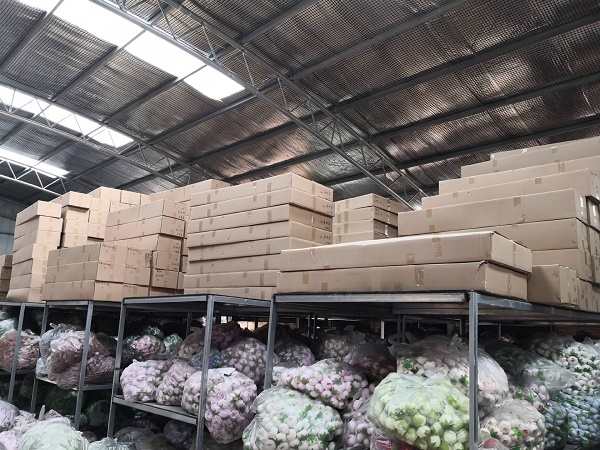
Selecting the correct material combination directly impacts product realism, durability, and profit margins. Tianjin factories specialize in advanced polymer and coated fabric techniques.
Table 2: Faux Floral Material Performance Comparis
| Material Type | Technical Characteristics | Key Advantages | Best Applications | Relative Cost Tier |
| Real-Touch PU (Polyurethane) | Liquid polyurethane molded onto flexible wire cores | Elastomeric feel, natural moisture appearance, 3D petal thickness | Premium bridal bouquets, close-up centerpieces | High |
| 3D-Printed Silk (Polyester Blend) | High-density fabric with textured digital polymer printing | Visible vein patterns, soft drape, vivid color saturation | Hydrangeas, Peonies, Roses, Delphiniums | Mid-to-High |
| UV-Stabilized PE / Plastic | Polyethylene mixed with UV-inhibiting additives | Waterproof, zero fading under direct sunlight, washable | Outdoor green walls, exterior landscaping | Mid |
| Classic Laminated Fabric | Starch-coated polyester stamped under heat presses | Cost-effective, rigid petal structure | Mass-volume fill flowers, commercial backdrop walls | Low-to-Mid |
3. Step-by-Step Sourcing Workflow for Importers
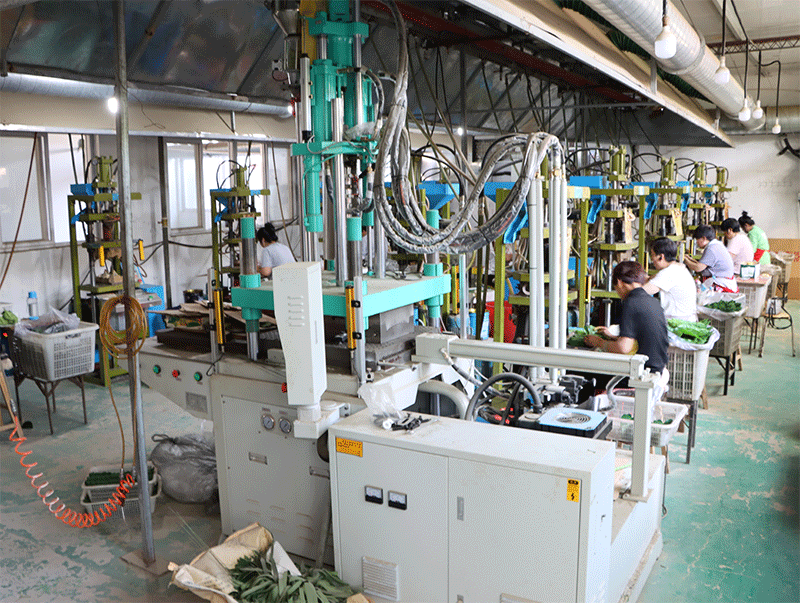
1.Product Specification Sheet (Tech Pack): Define stem length (cm), flower head diameter, petal count, fabric weight (GSM), wire gauge, and Pantone color codes.
2.Factory Vetting: Verify business licenses, ISO9001 quality management certificates, BSCI social compliance audits, and export license documentation.
3.Pre-Production Sampling: Always request a Golden Sample. Evaluate under natural daylight (D65 light source) to verify color gradients and seam quality.
4.Quality Control & Inspection: Implement Acceptable Quality Limit standards before balance payment release.
Key Takeaways for Procurement Officers
Focus on Value, Not Just Price: Sourcing from Tianjin guarantees superior botanical realism, essential for high-margin B2B markets.
Audit Before Mass Production: Always sign off on physical samples and explicitly define AQL inspection standards in your purchase order contract.
Leverage Regional Port Proximity: Utilize FOB Tianjin terms to maintain direct control over sea freight schedules and forwarder selections.
Frequently Asked Questions
What is the typical Minimum Order Quantity (MOQ) when working with Tianjin flower manufacturers?
Standard MOQs in Tianjn generally How are artificial flowers packed to minimize shipping costs and prevent damage?range from 300 to 1,000 stems per color/item for existing mold designs. For custom dye colors or unique floral molds (OEM/ODM), MOQs typically increase to 2,000–3,000 stems to justify production setup, fabric dyeing runs, and tooling calibration.al.
How do Tianjin suppliers ensure color consistency across large batch orders?
Professional exporters utilize Pantone Matching System (PMS) standards alongside computer-controlled liquid dye vats. To prevent batch-to-batch variation:Require suppliers to lock in a physical signed “Golden Sample.”Specify a maximum tolerance of $\Delta E < 1.0$ on spectrophotometer color testing for high-value orders.
How are artificial flowers packed to minimize shipping costs and prevent damage?
Faux flowers are vulnerable to crushing during sea transit. Tianjin factories employ specialized packing strategies to optimize volumetric weight.
What are the primary logistics routes from Tianjin to Western markets?
Most exports leave via Tianjin Port (Xingang Port – Port Code: CNTXG), the principal maritime gateway for Northern China. Average sea freight transit times include:
To US West Coast (Los Angeles / Long Beach): 14 – 18 days
To US East Coast (New York / Savannah): 28 – 35 days
To Northern Europe (Rotterdam / Hamburg): 30 – 38 days
To Australia (Sydney / Melbourne): 16 – 22 days
Can Tianjin factories handle custom OEM packaging and barcode labeling for retail?
Yes. Full-service export manufacturers support OEM branding, including:
Customized individual hangtags with company logo and UPC/EAN barcodes.
Branded display inner boxes
Eco-friendly polybags compliant with international plastic reduction standards.

